

Cleaning and prep
The lot is swept and blown clean, and oil-spotted areas are treated — sealer will not bond to dirt or to a patch of soaked-in motor oil.
Houston Parking Lot Sealcoating
A protective coat over sound asphalt — it slows the UV, water, and fuel damage that turns a grey lot into a resurfacing bill, and it gives new striping a clean black field to sit on.
Or call 361-876-7822·answered 24/7
The Work
Asphalt fails from the top down. Sun oxidizes the binder until the surface goes grey and brittle, rain works into the cracks that opens up, and fuel and oil soften whatever is left. Sealcoating puts a sacrificial layer between all of that and the pavement you actually paid for.
The work is only worth doing on a surface that is sound underneath, so we clean the lot, fill the cracks, and handle failed areas first. Sealing over a lot that needs repair just hides the problem for a season and costs you the price of the seal.
What’s Included
The lot is swept and blown clean, and oil-spotted areas are treated — sealer will not bond to dirt or to a patch of soaked-in motor oil.
Open cracks are filled before any sealer goes down. Sealcoat is a surface coat, not a filler, and it will telegraph every crack you leave under it.
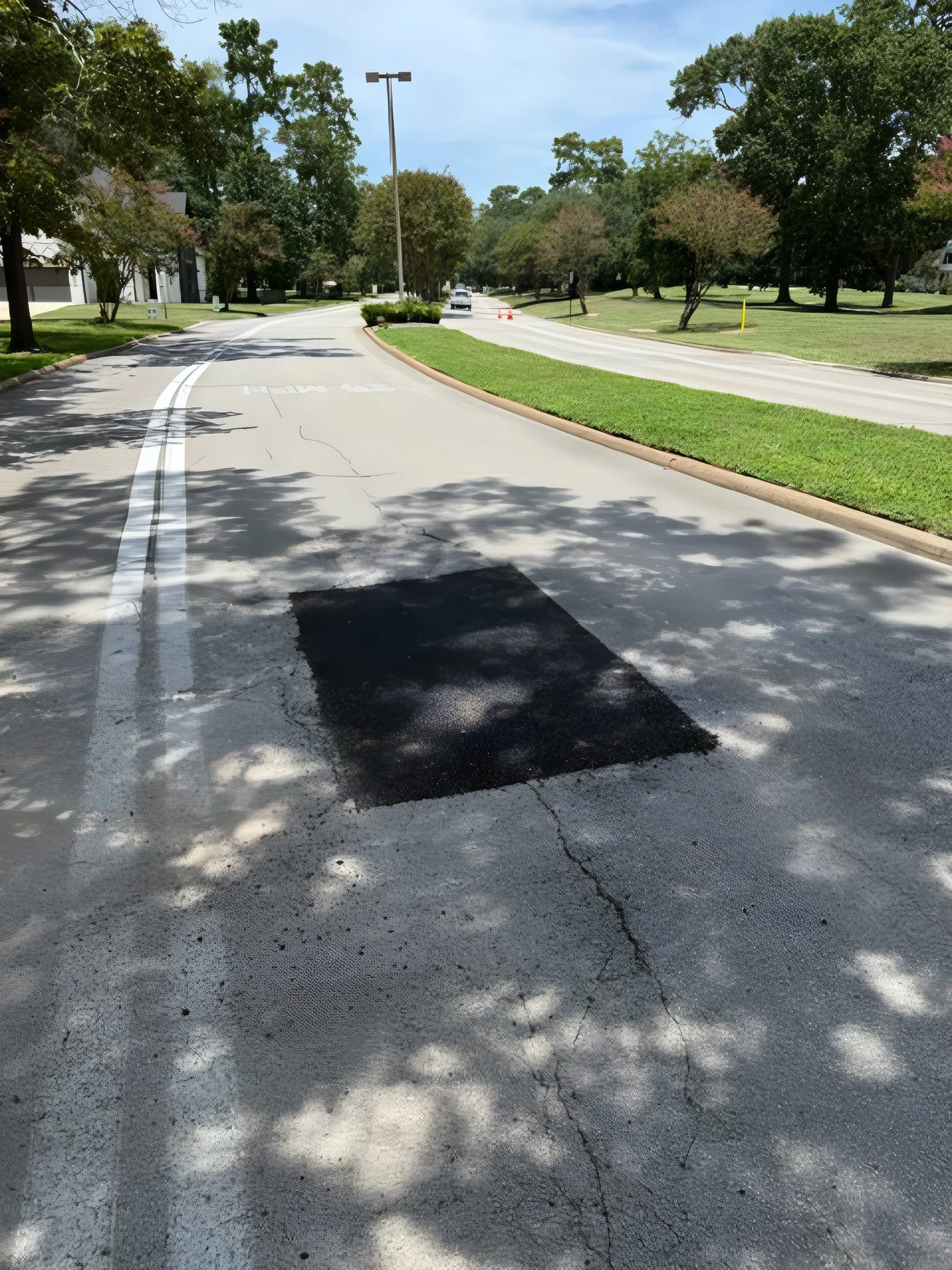
Potholes and failed sections are cut out and rebuilt first, so the finished lot is uniform instead of a smooth coat over soft spots.
Sealer applied at an even rate with cut-in edges along curbs, walks, and concrete aprons — no overspray on the sidewalk, no thin streaks through the drive lanes.
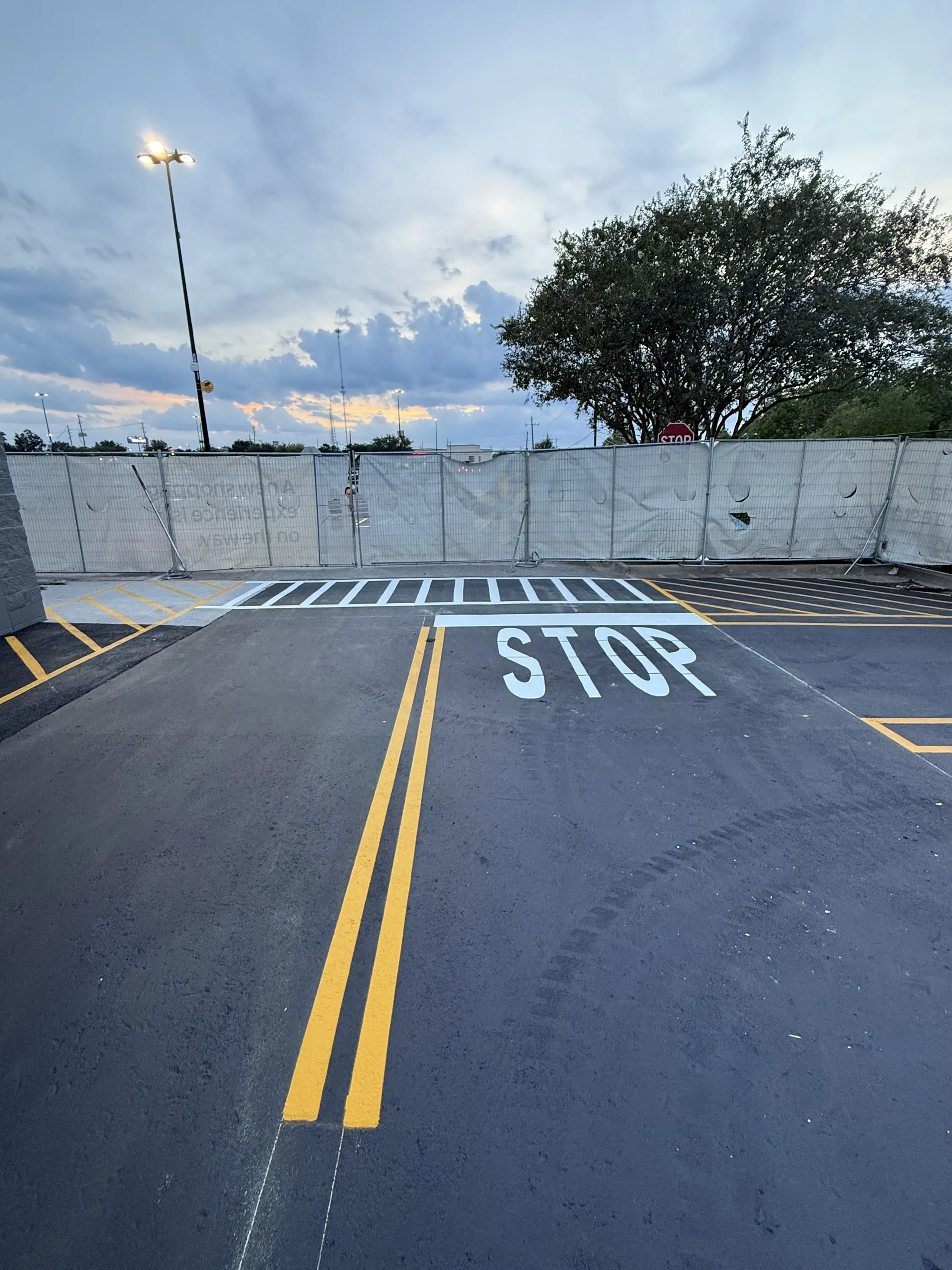
A sealed lot has to be restriped, and that is the best part: new paint on a fresh black surface reads sharper than it ever will on faded grey asphalt.
Our Work
The shot below is a real Coastal Roadworks job site.
Questions
Straight answers to what property managers and owners ask us most.
Anything else? Send it over or call 361-876-7822.
It depends on traffic, drainage, and sun exposure, but most Houston-area commercial lots benefit from sealcoating every two to four years. The honest test is the color: asphalt that has gone light grey and feels rough has already lost its binder at the surface.
Sealer needs to cure before traffic, so a lot is typically closed overnight or through a weekend, and larger properties are phased so only part of the lot closes at a time. Striping goes down once the coat has cured. We give you the schedule before we start.
No, and it is worth being clear about the difference. Sealcoating is a protective coat over pavement that is still structurally sound. Resurfacing lays new asphalt over a failing surface. Sealcoating is what keeps you from needing the second one as soon.
It will not. Sealer is roughly the thickness of paint — it covers, it does not fill. Cracks get filled and failed areas get repaired first, and anything left underneath will show through and reopen. Any contractor willing to seal straight over damage is selling you a season.
Sealcoating is an asphalt product. Concrete lots are maintained differently — joint sealing, repair, and striping. Send the property address through the quote form and we will tell you which one you actually have.
“Great work, these people take pride in their doings. Recommend to others!”
Free Quotes · No Obligation
Send the property address and what you’re seeing, and we’ll come back with straight answers and a clear number — usually after a quick site look.
Thanks for reaching out — we’ll review the details and get back to you soon. Need something faster? Call 361-876-7822 any time.